Foundation Leak Solution Finder
Determine the most appropriate repair method based on your symptoms and situation
Recommended Solutions
Water seeping through your foundation from the inside isn’t just a nuisance-it’s a warning sign. If you’re seeing damp spots, peeling paint, or that musty smell in your basement, you’re not alone. In Halifax, where freezing winters and heavy spring rains hit hard, foundation leaks from the inside are one of the most common-and most misunderstood-problems homeowners face. The good news? You can fix it. But only if you understand what’s really causing it.
Why Your Foundation Is Leaking from the Inside
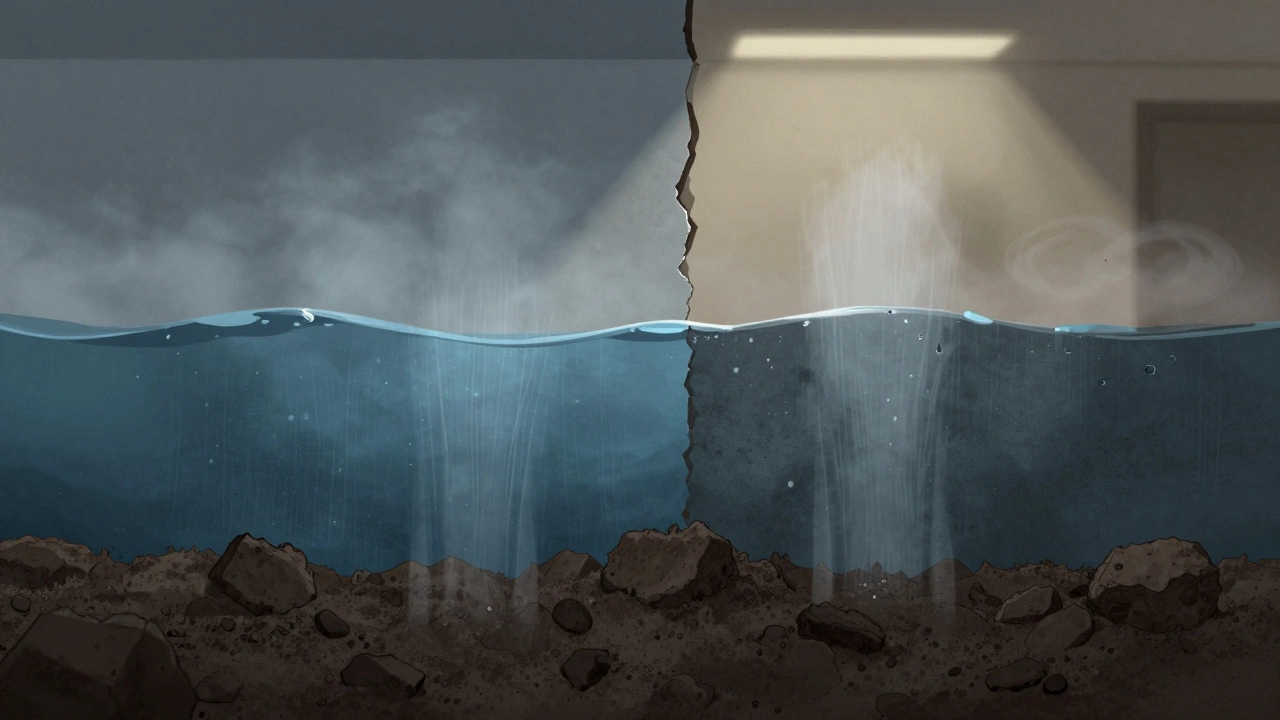
Most people assume interior leaks mean the foundation is broken. That’s not always true. The real culprit is usually hydrostatic pressure. When rain or snowmelt soaks into the soil around your home, the water pushes against the foundation walls. If the drainage system outside isn’t working, that pressure finds the weakest spot-often a hairline crack, a joint between blocks, or even porous concrete. The water doesn’t burst in dramatically. It creeps through slowly, then shows up inside as a stain, a puddle, or condensation on the wall.
Another common cause? Condensation. In older homes, especially those without proper insulation, warm, moist air from inside the house meets the cold foundation wall. The moisture turns to water droplets. It looks like a leak, but it’s not water coming from outside. It’s coming from your own air.
And then there’s plumbing leaks. A burst pipe behind a wall, a faulty sump pump, or a leaking water heater can all mimic foundation leaks. Before you start tearing into concrete, rule out the easy stuff. Check your water meter. Turn off all water sources. If the meter still moves, you’ve got a pipe issue.
What to Look For Inside
Not all interior moisture is the same. Here’s how to tell what you’re dealing with:
- White, chalky residue (efflorescence) on walls or floors? That’s salt left behind when water evaporates. Classic sign of water pushing through concrete from the outside.
- Mold growing on drywall or wood framing? That’s a red flag. Mold needs moisture to grow-and if it’s on the inside surface, the water source is likely coming from the wall or floor below.
- Water pooling on the floor after heavy rain? That’s hydrostatic pressure doing its work. The water has nowhere else to go.
- Dampness only during winter? Could be condensation. Check your humidity levels. If they’re above 60%, you’re likely dealing with indoor air moisture, not a structural leak.
Take photos of the spots. Note when they appear. Does it happen after snowmelt? After a long rain? After running the washing machine? The pattern tells you the source.
Stop the Leak: Interior Solutions That Actually Work
There’s a myth that you need to dig up your yard and install an exterior drain to fix a leaky foundation. Not true. For many homes, especially in older neighborhoods like Halifax’s North End, interior fixes are not only cheaper-they’re more practical.
1. Install an Interior Drainage System
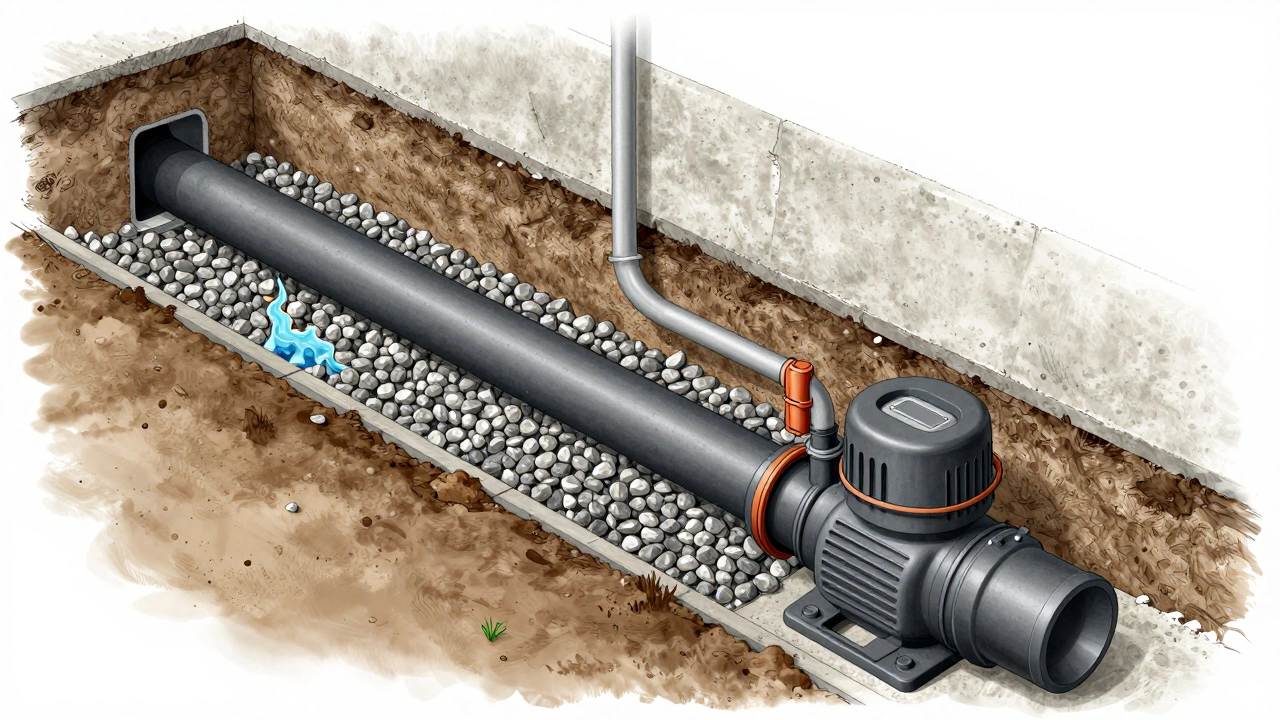
This is the most reliable fix for hydrostatic pressure. A professional installs a perforated pipe along the inside edge of your foundation, right where the floor meets the wall. The pipe sits in gravel and connects to a sump pump. When water enters the basement, it flows into the drain, gets pumped out, and away from your house.
It’s not a DIY job. The floor needs to be broken up, the drain laid, and the concrete re-poured. But it’s done in a day or two, and it lasts 20+ years. Companies in Nova Scotia that specialize in foundation repair use high-density polyethylene pipes and submersible pumps rated for continuous use. Look for systems with a warranty of at least 10 years.
2. Seal Cracks with Hydraulic Cement
Small cracks (under 1/8 inch) can be sealed from the inside. Hydraulic cement expands as it dries, forcing itself into the crack and forming a watertight bond. It’s not a long-term fix for large structural issues, but it works great for minor leaks.
Here’s how: Clean the crack with a wire brush. Wet the area slightly. Pack the cement in firmly with a trowel. Let it cure for 24 hours. Then paint over it with a waterproofing masonry sealer.
Don’t use regular caulk or silicone. They’ll peel off within months under constant pressure.
3. Apply a Waterproof Coating
There are special interior waterproofing paints and coatings designed for concrete. They’re not magic-they won’t stop water from pushing through a major crack-but they can help slow down minor seepage.
Look for products labeled “cementitious waterproofing” or “penetrating crystalline waterproofing.” Brands like Xypex or Koster are trusted in Canada. Apply two coats after cleaning the surface with muriatic acid and rinsing thoroughly. These coatings bond chemically with the concrete, becoming part of it.
4. Control Indoor Humidity
If your leak is condensation, not water intrusion, you need to change your indoor environment.
- Use a dehumidifier. Keep basement humidity below 50%. A 70-pint model is usually enough for a 1,000 sq ft space.
- Run exhaust fans in bathrooms and kitchens. Don’t let steam linger.
- Seal air leaks around windows and doors. Cold air coming in causes warm air to condense on cold surfaces.
- Insulate your foundation walls. Spray foam insulation creates a thermal barrier and reduces condensation.
What Doesn’t Work
There’s a lot of junk out there-products that promise quick fixes. Avoid these:
- Painting over mold. You’re just hiding the problem. Mold will come back, and worse.
- Using plastic sheeting or vapor barriers. Trapping moisture behind them creates a perfect environment for rot and mold.
- Drilling holes in the floor. That’s not drainage-it’s creating new entry points for water.
- Ignoring the issue. Water doesn’t stop. It finds new paths. Over time, it weakens concrete, rusts rebar, and causes walls to bow. Repairs get exponentially more expensive.
When to Call a Professional
You can handle small cracks and condensation on your own. But if you see any of these, call a foundation specialist:
- Cracks wider than 1/4 inch
- Water coming in under the floor or through multiple walls
- Basement walls bowing inward
- Efflorescence covering more than 10% of the wall surface
- Water damage that’s been there for over a year
Reputable contractors in Nova Scotia will do a free inspection. They’ll check your drainage, test your sump pump, measure humidity, and use a moisture meter to find the source. Ask for a written report and a warranty on any work done.
Prevent It from Happening Again
Fixing the inside is only half the battle. To keep water out for good, you need to manage it outside too.
- Make sure your gutters are clean and direct water at least 6 feet from the foundation.
- Grade your yard so it slopes away from the house. Even a 2-inch drop over 10 feet helps.
- Keep shrubs and trees at least 3 feet from the foundation. Roots can crack concrete and hold moisture.
- Check your downspouts annually. A clogged one can dump hundreds of gallons next to your foundation.
These steps won’t fix a broken foundation-but they’ll stop new leaks from forming. And in a place like Halifax, where the ground freezes and thaws repeatedly, prevention is cheaper than repair.
Costs You Should Expect
Interior foundation repairs vary based on size and severity:
- Hydraulic cement patch (small crack): $100-$300
- Waterproof coating application: $3-$8 per sq ft
- Interior drainage system + sump pump: $5,000-$10,000
- Dehumidifier: $500-$1,200
- Professional inspection: $0-$300 (often free with repair quote)
Don’t go for the cheapest bid. Look for companies with local experience, insurance, and a track record in your area. Ask for references from homeowners in Dartmouth or Bedford-they’ve dealt with the same soil and weather.
Can I fix a leaking foundation from the inside without digging outside?
Yes, you can. Interior drainage systems, waterproof coatings, and crack repairs are proven methods that don’t require excavation. Many homes in Halifax, especially older ones with limited yard space, are fixed this way. The key is addressing the root cause-not just the symptom. If water is being pushed in by pressure from outside, an interior drain system will capture it before it reaches your floor.
Is basement waterproofing paint enough to stop leaks?
No, not on its own. Waterproof paint works as a barrier against minor dampness or condensation, but it can’t hold back water under pressure. If water is seeping through cracks or porous concrete, paint will peel, bubble, or fail within a year. Use it as a secondary layer after fixing structural issues, not as a primary solution.
Why does my basement leak only in spring?
Spring is when snowmelt and heavy rains saturate the ground. In Halifax, the soil is often clay-heavy, which holds water and doesn’t drain well. That creates high hydrostatic pressure against your foundation. If your exterior drainage is poor or your gutters are clogged, that pressure forces water through any weak point. It’s seasonal, but the underlying issue won’t go away-fix it before next winter.
Can a leaking foundation cause structural damage?
Absolutely. Water weakens concrete over time. It can rust steel reinforcement bars inside the foundation, causing them to expand and crack the surrounding material. It can also cause efflorescence, which breaks down the surface. In extreme cases, walls can bow or shift. If you notice new cracks, uneven floors, or doors that stick, the structure may already be compromised. Don’t wait until it’s an emergency.
Should I install a sump pump even if I don’t have water now?
If you’re in a low-lying area or have a history of flooding, yes. A sump pump is your best insurance. Even if your basement is dry now, soil conditions change. A heavy rainstorm, a clogged drain, or a frozen gutter can turn your basement into a pool overnight. A battery-backed sump pump gives you peace of mind during power outages. It’s one of the smartest investments for any home in Nova Scotia.
Next Steps
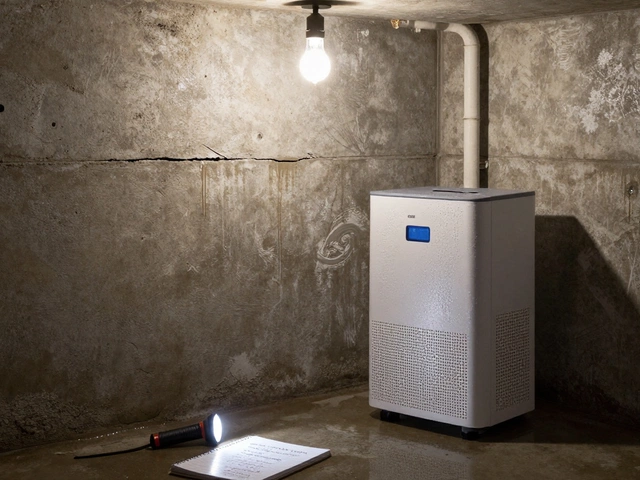
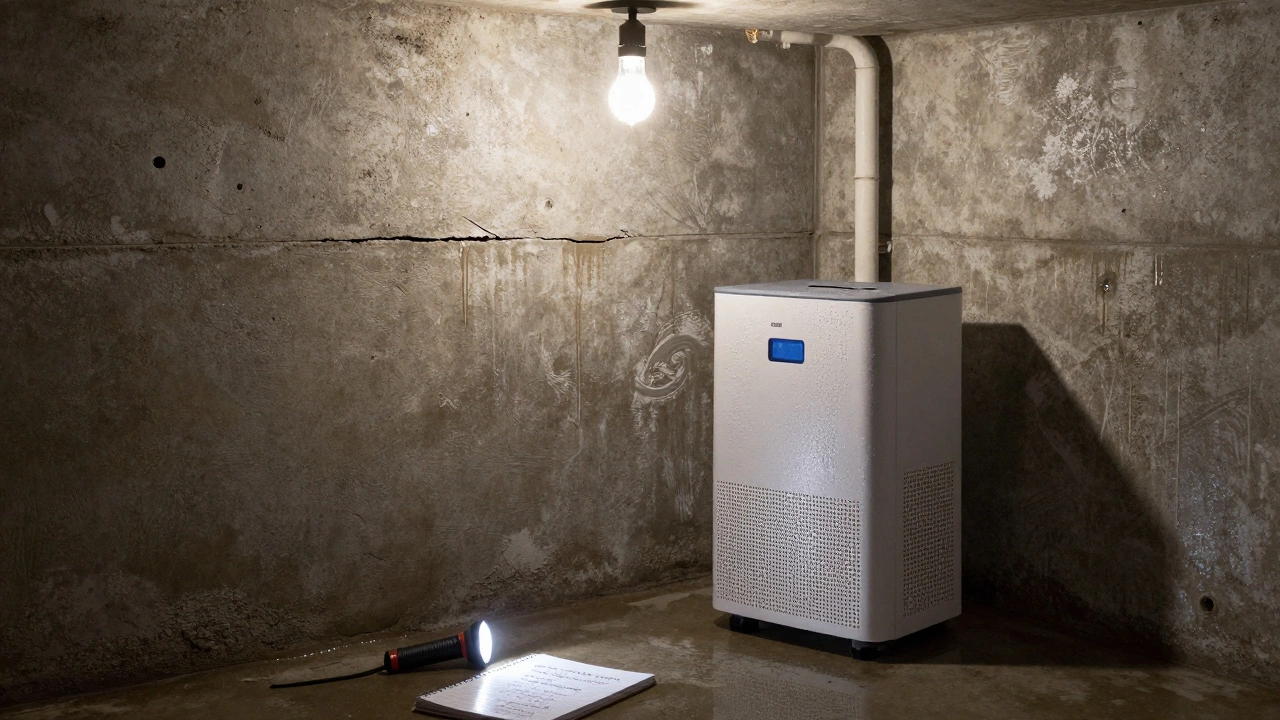
Start today. Take a flashlight and walk through your basement. Write down every damp spot, crack, or stain. Check your gutters. Turn on your dehumidifier. Take a photo of the worst area. That’s your baseline.
If the problem is small, fix it yourself with hydraulic cement and a good sealer. If it’s spreading or you’re unsure, call a local foundation expert. Don’t wait for spring. The longer water sits, the more damage it does-and the more it costs to fix.